

The Makeup Station Edit: Make Tomorrow's Routine Easier to Find
As an Amazon Associate I earn from qualifying purchases. This guide contains affiliate links.
A calmer makeup station begins with visibility. When the products you use are mixed with forgotten purchases, spare tools and empty packaging, the morning can start with a search rather than a choice. Today's BeautySift Journal is an invitation to edit that small space without immediately filling it again. The aim is not to build an elaborate display or add steps to a routine. It is to give the tools and products you already choose an understandable place. Set a small boundary, follow the relevant product guidance, and create a station that makes sense on an ordinary morning when you do not have time to reorganize it.
Start with one surface and one decision
Choose a manageable section: the top of a vanity, one drawer or the container you reach for most often. Avoid emptying every cupboard if you cannot finish putting the contents away. Remove loose packaging and separate items that need a decision from those you clearly use. Check the product labels and manufacturer guidance when deciding how an item should be kept, cared for or discarded. Do not rely on appearance alone to decide that a cosmetic is suitable to continue using. This is an organizing exercise, not a medical assessment or a substitute for product-specific advice. A finished small area is useful because it gives your next morning a clear starting point. An unfinished large sort can simply move the search somewhere else.
Let the routine determine the layout
Think through the order in which you actually get ready, rather than the order that would look attractive in a photograph. Place the items you routinely choose where they are easy to identify and appropriately stored. Keep occasional products separate so they do not interrupt the daily selection. If your routine changes by occasion, create a small occasional group rather than making every possibility equally prominent. Check storage requirements for the products involved, including any instructions about exposure or environment. The best location is one that suits both those requirements and your habits. You may discover that a container you already own works well once duplicates and unrelated items are removed. Give the new arrangement a few ordinary mornings before deciding that it needs more equipment.
Edit tools by role rather than by quantity
Group makeup tools by their intended role, taking the relevant instructions as the guide. Keep the ones you use regularly easy to distinguish from the ones you are still evaluating. A set such as the BS-MALL 18-Piece Makeup Brush Set can offer an assortment to consider, but eighteen pieces should not become eighteen compulsory steps. Examine the current set contents if you are thinking of buying it, and connect the useful tools to specific tasks. The same principle applies to a collection you already own: understand what a tool is for before giving it space at the front of the station. Put items awaiting care in a clearly separate place and follow the maker's directions before returning them to regular use.
Keep a small queue of unresolved questions
An edit usually uncovers a few questions. You may need to find care instructions for a brush, confirm a cosmetic's storage guidance, or decide whether an occasional item still fits your routine. Write those questions down instead of using uncertainty as a reason to purchase replacements immediately. Keep the queue short and concrete. A note saying check the brush maker's directions is more useful than a vague intention to improve the whole station. If a product raises a concern about use or your skin, seek appropriate product-specific or professional advice rather than treating organization as a solution. Deal with one question at a time. The purpose of the list is to support informed decisions without making a quick tidy turn into an entire new beauty project.
Give the arrangement a simple closing ritual
At the end of getting ready, return the ready-to-use items to their places and identify anything waiting for care. That closing step can reveal whether the layout is practical: if returning something is awkward every day, reconsider its home. Avoid adding a complicated system of categories that only makes sense while you are actively organizing. The labels and divisions should be understandable at a glance. Let the station stay small enough to reset easily, with occasional items stored appropriately elsewhere. Over the next few mornings, notice what you repeatedly move or cannot find. Adjust those few points rather than buying another full organizer. A calm setup comes from reducing small frictions in your actual routine, not from displaying every product and tool you could possibly use.
- Choose one drawer or surface that can be fully reset today, and return everything else to an appropriate place instead of creating new piles.
- Separate daily choices from occasional choices so the items you need tomorrow are identifiable without moving the rest of the collection.
- Keep items awaiting care visibly apart from ready-to-use tools, following the manufacturer's directions before returning them to the station.
- Record one specific unanswered care or storage question and resolve it before deciding that another purchase is the answer.
Products to consider
| Product | Useful for | Consider before buying |
|---|---|---|
| BS-MALL 18-Piece Makeup Brush Set | The BS-MALL set is an optional catalogue starting point for someone whose routine genuinely needs several documented brush roles, rather than more display pieces. | Review the current assortment before purchasing. This Journal does not confirm the set's materials, accessories, cleaning requirements or application results. |
BS-MALL 18-Piece Makeup Brush Set
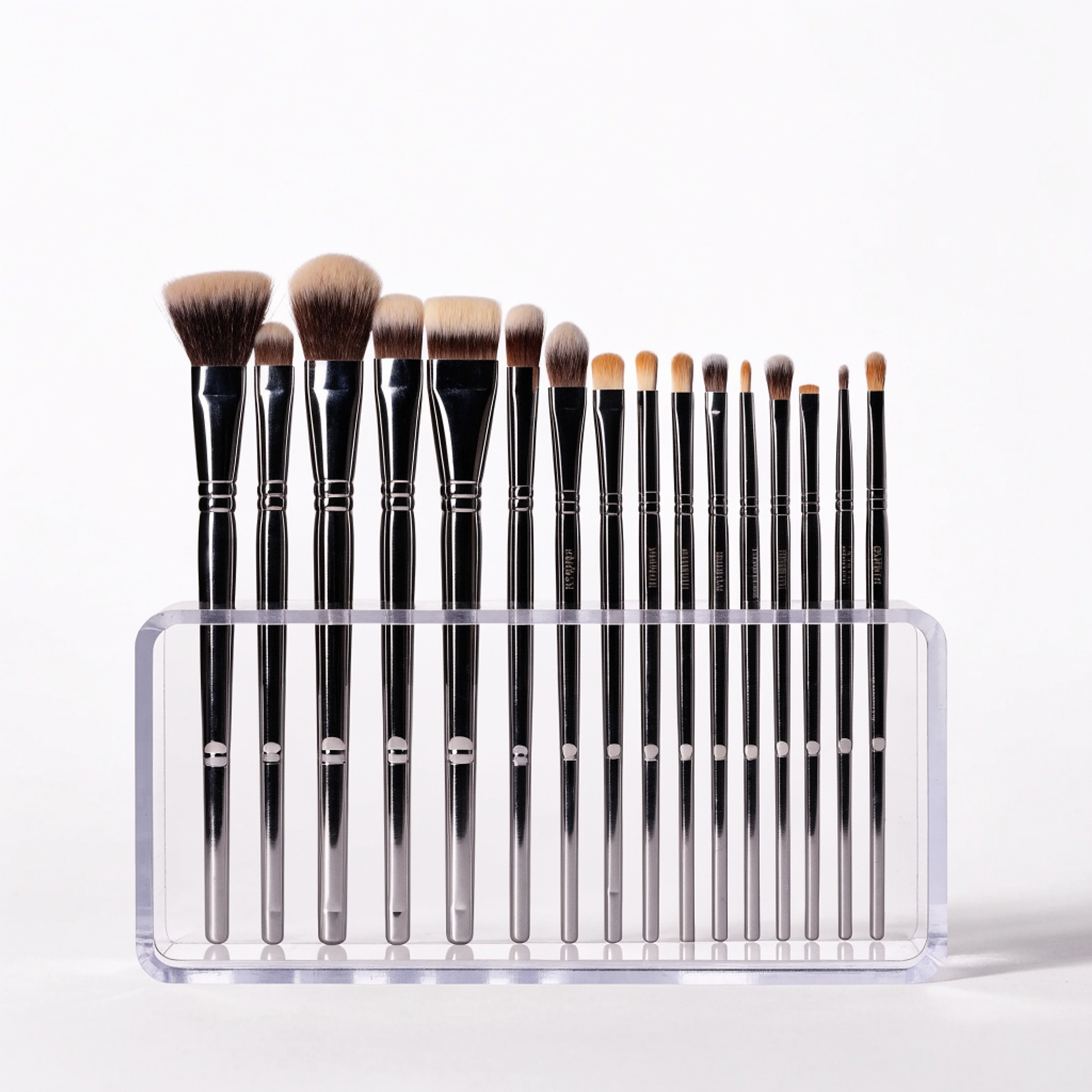
The BS-MALL set is an optional catalogue starting point for someone whose routine genuinely needs several documented brush roles, rather than more display pieces.
Review the current assortment before purchasing. This Journal does not confirm the set's materials, accessories, cleaning requirements or application results.
Common questions
Do I need a new organizer to begin?
Start by editing one manageable area and testing a suitable container you already own. Check product storage guidance. A new organizer is useful only if the edited collection still has a specific storage problem you can describe.
Should every brush remain on the daily surface?
Keep your regular tools identifiable and occasional ones appropriately stored separately. The intended roles and maker care directions should guide the arrangement; a large assortment does not require you to use every piece each day.
What if I am unsure whether a product is still suitable?
Check its label and manufacturer guidance, and seek appropriate professional advice if the concern relates to your skin or use. Tidying the station does not establish that a product is suitable to keep using.
Recommendations draw on the verified BeautySift catalogue. We have not personally tested these products. Check the exact variant, instructions, and current availability before buying.
